

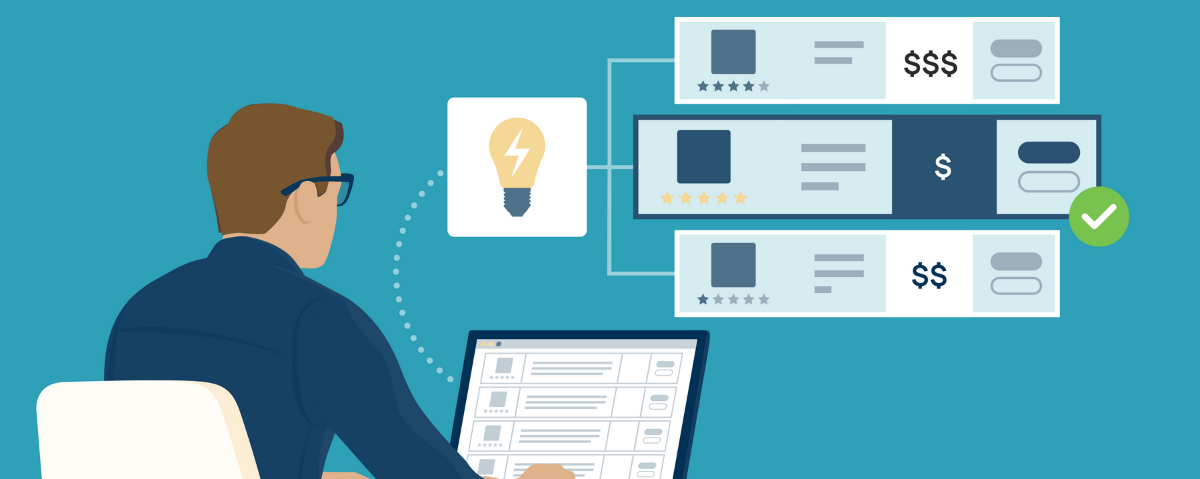
Price changes should never feel like a leap of faith. Many pricing teams still rely on instinct or limited analysis when launching price changes. Here’s why simulations are table stakes and how pricing leaders use it to reduce risk, improve alignment, and make confident decisions before prices go live.
Pricing decisions carry real weight. They shape revenue, margin, customer behavior, and competitive position.
Many organizations still launch price changes based on instinct, experience, or limited analysis. Teams often rely on historical averages, directional assumptions, manual analysis mixed with confidence built over years in the business.
That approach once felt sufficient. That approach no longer works.
Market volatility, customer-specific pricing, and rising margin pressure have increased the stakes. A single pricing move can trigger downstream effects that are difficult and expensive to reverse.
That’s why pricing simulations have become table stakes for modern pricing teams.
Pricing Confidence Often Masks Hidden Risk
Pricing teams often feel confident before launching a price change. The business case looks reasonable. Costs increased. Competitors adjusted pricing. Leadership expects action.
Confidence alone does not reduce risk. Teams without simulation understand what they plan to change. Teams without simulation rarely understand what will happen after the change goes live until they can run heavily analysis on changes
Several issues tend to surface after launching that price change:
- Revenue impact differs meaningfully from expectations
- Margin gains erode due to discounting or customer pushback
- High-value customers respond differently than averages predicted
- Sales behavior offsets the intended pricing strategy
These outcomes rarely reflect poor judgment. These outcomes reflect limited visibility.
Experience Alone Cannot Keep Up With Pricing Complexity
Pricing experience still matters. Judgment remains essential.
Modern pricing environments operate at a scale that experience alone cannot manage. Thousands of SKUs, customer-specific agreements, regional strategies, discounts, and rebates interact simultaneously.
Instinct struggles in environments where:
- Customer price sensitivity varies widely
- Discounts interact unpredictably with list price changes
- Rebates influence net price realization
- Volume shifts affect mix and margin at the same time
Simulation supports pricing judgment by showing likely outcomes before decisions are finalized.
Simulation Turns Pricing Decisions Into Informed Choices
Simulation allows pricing teams to model decisions before prices reach the market. Teams can test assumptions, compare scenarios, and quantify risk early.
Effective simulations answer questions executives care about:
- How revenue and margin change under different volume assumptions
- Which customers absorb increases and which resist
- How discounts and rebates affect net price realization
- Where downside risk concentrates across segments or regions
Clear answers replace guesswork. Data-backed scenarios replace debate. Simulation accelerates decisions by removing uncertainty.
Scenario Thinking Improves Executive Alignment
Many pricing discussions focus on a single outcome. Leaders ask for one number. Teams deliver a forecast.
Single-number forecasts hide uncertainty. High-performing pricing teams present scenarios instead. Leaders see a range of outcomes based on realistic assumptions. Best-case, expected-case, and downside scenarios frame the discussion. Scenario-based conversations improve decision quality. Leadership understands trade-offs before committing. Pricing teams earn credibility by addressing risk openly.
Confidence increases when uncertainty becomes visible and manageable.
Risk Reduction Starts Before Prices Go Live
Pricing risk rarely originates from the decision itself. Risk comes from surprises after launch.
Simulation surfaces exposure early. Teams can identify:
- Customers likely to renegotiate or churn
- Products with higher-than-expected elasticity
- Segments that carry disproportionate margin risk
Early insight creates options. Teams can adjust thresholds, phase increases, protect key accounts, or equip sales with clearer guidance.
Pricing flexibility decreases once changes reach customers.
Simulation Changes How Pricing Teams Lead
Simulation strengthens pricing leadership across the organization.
Pricing leaders enter executive discussions prepared. Teams explain not only recommendations but also trade-offs. Leaders answer “what if” questions with evidence instead of reassurance.
That confidence reshapes perception.
Pricing teams become strategic partners rather than tactical enablers. Decisions earn trust because they reflect analysis, not optimism.
Sales teams gain clarity. Finance gains forecast confidence. Executives gain comfort knowing risk has been evaluated.
Simulation Is Now Table Stakes
Simulation once felt optional. That perception no longer holds:
- Pricing complexity continues to increase. Manual tools fail to scale. Spreadsheet models struggle to capture real-world interactions between price, volume, discounts, and incentives.
- Market pressure leaves little room for trial and error. Poorly executed price changes damage credibility, invite competitive response, and strain customer relationships.
- Simulation reduces reliance on post-launch explanations. Teams understand impact before committing.
Launching a price change without simulation introduces avoidable risk.
Better Decisions Matter More Than Perfect Predictions
Simulation does not guarantee perfect accuracy. No model captures every variable.
Better decisions remain the goal.
High-performing pricing teams use simulation to explore outcomes, understand risk, and move forward with confidence. Fewer surprises follow. Alignment improves. Results strengthen. Pricing becomes a lever for growth instead of a source of anxiety.
Price changes introduce real risk. Simulation helps pricing leaders understand that risk before it affects revenue, margin, or customer relationships.
Modern pricing teams use simulation to test scenarios, pressure-check assumptions, and align stakeholders around realistic outcomes.
Connect with a Vendavo pricing expert to see how simulation helps teams reduce downside risk and move forward with clarity. Schedule a demo to learn how pricing simulation supports confident decision-making.